| Artist | Antonio López García |
|---|---|
| Title | María |
| Year | 1972 |
| Medium | Pencil on Paper |
| Dimensions | 70 x 53.3 cm |
| Location | Private collection |
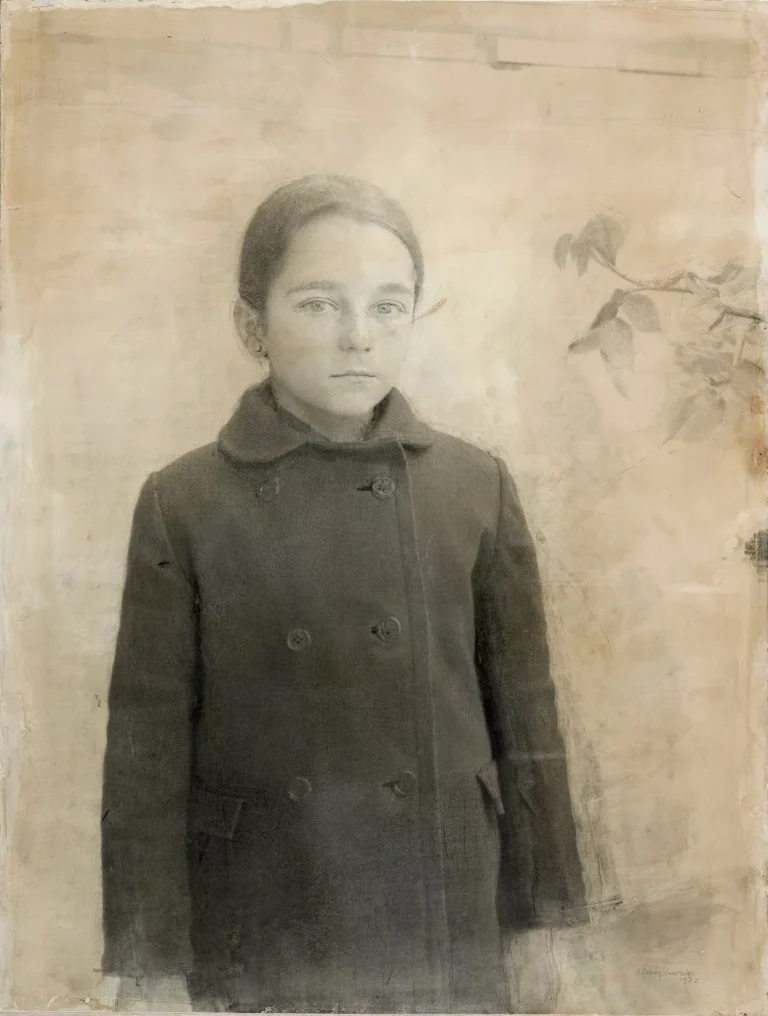
When you see María scribbled on the page in pencil its like you pause, even though its just a name. It feels uncomfortably familiar, like a soft whisper from a shared dream. That coat – the one that’s been folded up tight, and buttoned right up to the neck – somehow makes a memory pop into your head. You might’ve even worn something quite similar to that when you were 10 years old. You cant help but wonder if your own coats been tucked away somewhere in your mind too. Antonio Lopez painted a time that somehow feels like it belongs to all of us.
He painted his own daughter María back in autumn 1972, when she was a 10 year old, by all accounts. Its an unfinished portrait & that very fact is part of what makes it so quietly powerful. The background just sort of melts away. Her hands & bits of her face seem to just fade out of focus, like the edges of a fading memory Lopez didnt try to draw every single detail. He backed off in places giving you space to feel, rather than just coldly look.
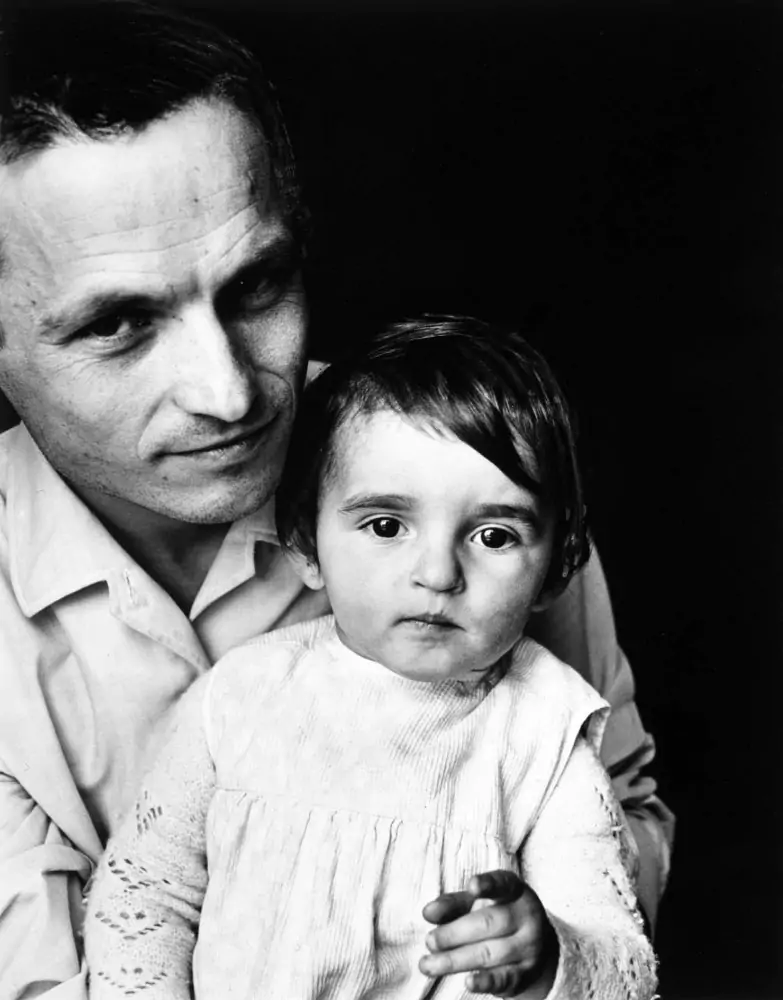
Lopez is a master of hyperrealism, with a background in Madrid’s prestigious art academy. He’s the kind of person who really lets reality sink in over time – it’s not something that comes easily. Rather than starting with a photograph, he draws inspiration from life. Often he’ll spend days working on a single piece, waiting for the model to shift a hair, purse her lip or take a deep breath. And in this case, his model happens to be his own daughter María – so that’s a whole different dynamic at play. The sessions may go on indefinitely but the minute María gets tired or needs a break, the drawing comes to a standstill. That being said, even the pauses can be a source of wonder, leaving behind something quietly beautiful.
Have a look at the coat he’s drawn. For Lopez, getting fabric folds just right is kind of a spiritual thing. In this case the wool is so thick and definitive that it creates a clear barrier between the girl and the world outside. And yet her eyes are all soft and guarded – like she’s some kid refusing to keep still, or someone asking you to let in on a secret.
But the lack of details – the blurred hands, the non-existent background – it makes it timeless. You don’t just see a 10 year old kid from 1972 – you see childhood in all its fleeting, present-tense beauty. And it’s the way clarity clashes with blur, the way a memory starts to form that’s so familiar it’s almost tangible – it’s like when you recall those eyebrows, or the cold winter mornings, or the itch to get inside where it’s warm.
Something else : art students sometimes see unfinished work as half baked , but López, invites you, to see it as a mirror instead. Have I ever stopped to think about just how unfinished my own memories feel – all fuzzy around the edges? Have I ever caught a glimpse of time slipping away from me in a portrait that I thought I thought I knew?
It stirs something deep because the portrait is whispering about something that isn’t there. María’s parents are getting older, her kids are growing up fast, & I’m here , viewer, chasing the mist of memory through a single sketch.
Here’s a small but telling detail : the buttons. All buttoned up and tight – just like we used to bundle up against the cold when we were kids right? And what that said was I’m safe, but I’m also fragile. López didn’t overdo it either . In that tiny little detail lives the whole of a whole childhood
I think of how few artists captured children like that – just children being. No saintly halos. No grand themes. Just a coat, a gaze, a little girl who needed to stop posing.
When you step back, the portrait softens but stays steady. Unfinished but unchanged. If those hands aren’t drawn, it’s not a failure – it’s a space for you to breathe, to wonder what she was thinking, what López was feeling when she finally rested.
Maybe he felt relief. Maybe love. Maybe sorrow that time was slipping. He let María walk away from sitting still, and gave us a drawing that holds both presence and absence. A quiet grace, something rare, something human.

This article is published on ArtAddict Gallery where we explore the intersections of art, history, and culture. Stay with us for more insights and discoveries!