| Artist | Amedeo Modigliani |
|---|---|
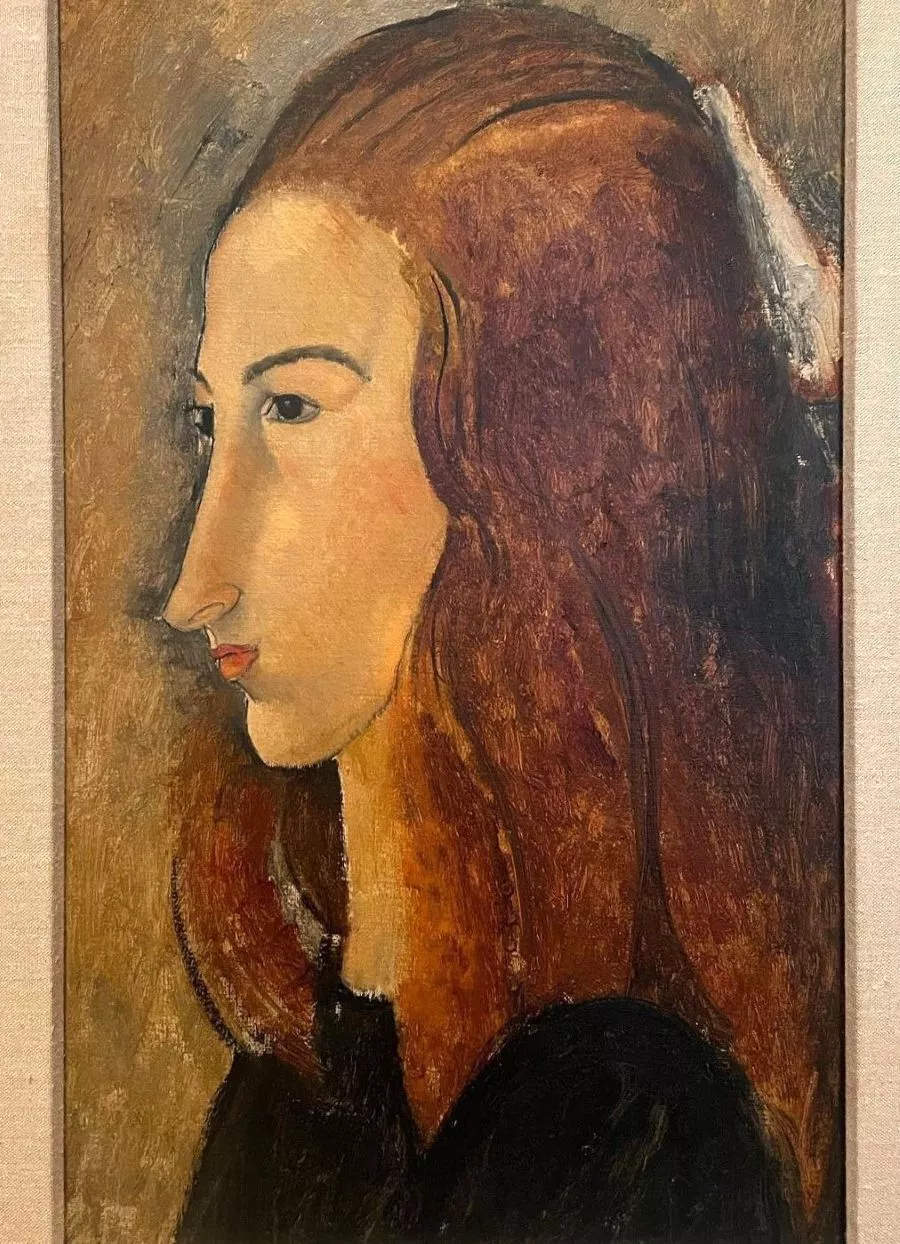
| Title | Portrait of a Young Woman (Jean Hébuterne) |
| Year | 1918 |
| Type | Oil on canvas |
| Dimensions | 18 × 11 in. (45.7 × 27.9 cm) |
| Location | Yale University Art Gallery |
Amedeo Modigliani was very drawn to African sculptures that he would’ve seen in exhibitions in Paris, for instance at Musée du Trocadéro. He was especially interested in the treatment of the human body – the very stylized, abstract treatment of the human body – in African art. And he translated this influence into his own works.
At the Yale University Art Gallery you can find the portrait of a young woman by Modigliani, which was painted in 1918. It shows the head of a young woman. The young woman depicted in this painting was his mistress and companion Jean Hébuterne, an art student as well.
Modigliani used the abstract treatment of the human face, which can be found in African masks, especially from the Ivory Coast. When you look at the face, it seems like a very long oval, something that you would find in African sculptures as well. The face is very small itself, and it has a sculptural quality to it, especially through the very long nose and small mouth, which stresses the similarities with African masks.
The African influence is not as obvious as in some of his other works, especially his nudes, but then again, this has a small size itself and is a very sweet image of the woman he loved. It makes it really a more intimate work. There’s something personal and intimate but also something which makes you think that this is actually not a depiction of a real woman but more of an ideal woman. So she looks away from the viewer, she’s shown in profile in a very static way, she doesn’t seem to smile, she seems completely absorbed almost as if she herself is not there – these factors makes you think that she’s actually a sculpture.
Text from the Yale University Art Gallery official website

This article is published on ArtAddict Gallery where we explore the intersections of art, history, and culture. Stay with us for more insights and discoveries!